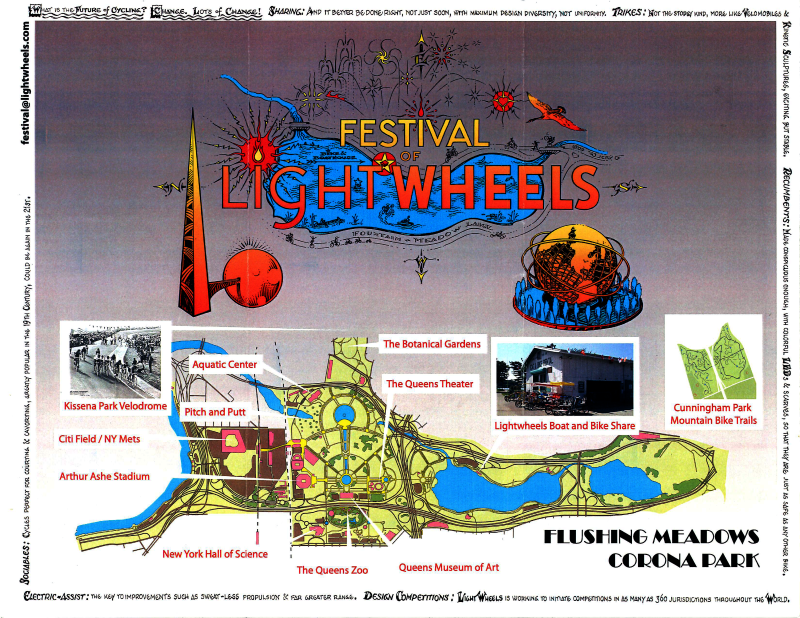
Summary: The Solo Foundation/LightWheels Submission to NYC RFEI,


“Request For Expressions of Interest”, in a possible bike-share program 9/15/2008


A fully evolved and maximally-useful shared-bicycle (tricycle) system must include:


·         The ability for all, not just some, to enjoy the benefits of these vital public conveyances, which all of us may partake of some of the time, by having the users of “luxury” vehicles pay enough to reserve them, for their own use at certain times, to fully subsidize the free availability of this system to all, at all times.

·         A great variety of vehicles, configurations, sizes, capacities, decorations etc.

·         The means to collect these vehicles and move them to where they will be needed the most, from where they are not particularly needed, in a quiet, efficient, safe and colorful fashion, maybe even automated.

·         Provision for smooth connections to all other forms of transport from buses, to trains to airplanes to automobiles.

·         A reasonable expectation of a much safer environment, in which automobilists are held to a far higher standard of good behavior and those unprotected by tons of steel can feel secure from harm as they make their way to their destinations.

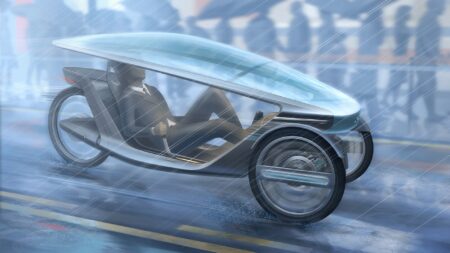
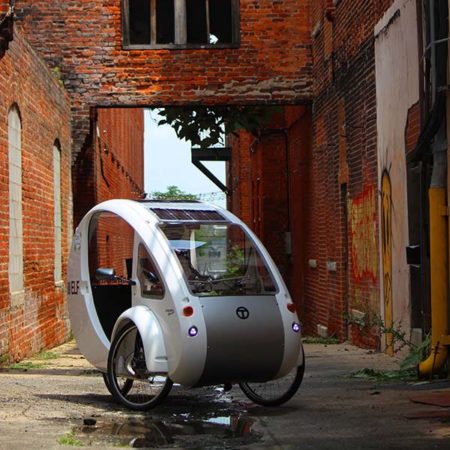
·         Weather protection against rain, wind and cold, road service, onboard communications, radio and beyond electronics, GPS locators for convenience and security, locking devices, provisions for additional riders, legal electric-assist, room for gear, including towable, fold-out units.

·         A conspicuous connection for every vehicle to a different, local, child- or senior-serving, community-involved and deserving institution, that gets a percentage of the earning power of that vehicle.  Anybody who steals this vehicle is also, conspicuously, robbing this group.


        This program can give New York City a chance to shine, by employing its natural advantages, of density and terrain, to deploy the next generation of transportation options.  Our artists, craftspeople engineers, designers and others can create the future here, test it out and work out the kinks, and become the center of this activity into the future while making a more beautiful and livable city too.


2.1.1 Contact information


Howard F. Seligman, President                            Steven Stollman, Managing member, LightWheels, LLC
The SOLO Foundation                                       Boat House at Meadow Lake, Flushing Meadow Corona Park,

1178 Broadway S-313                                       New York, NY  11368 (646) 306-1976

New York, NY 10001 (212) 375-5106                   EIN 263154784

EIN 11-2547289                                                                


(BOLD TYPE IS PART OF NYC’S REQUEST)


2.1.2 Background and experience with bike sharing


            The Solo Foundation. Based in New York City, has since 1980 been organizers and supporters of art-related activity including group exhibitions and live dance, music and theatre performances.  Organizing group shows is conceptually a form of space sharing. Artists are harder to organize than bikes.  Our intention is to turn the bicycles into objects of art by assigning individuals to decorate the vehicles.  Bicycle stands are a form of sculpture and the natural tendency of people to congregate at them will create impromptu performance sites. It is ironic that our organization's name is 'solo' in that we have always been about collaboration.  Our foundation has acted as a fiscal sponsor and umbrella organization for newly formed not for profit arts groups.  We have assisted them in obtaining tax exempt status and continue to work with them after they grow. Our President, Howard Seligman serves on the Board of Directors (as treasurer) of six other non for profit arts groups based in New York City and is often trying to bring together individuals for specific projects to cut across geographic and cultural boundary lines. The generation of an ambitious vehicle design contest, will benefit the bike share program.
           LightWheels LLC. 25 years of putting on events like rides to Washington DC, International Conference on Appropriate Transportation etc, and supporting human-powered transportation. Started the pedicab industry 15 years ago. Supported 2003 Bike Summer. Hosted International Messenger race. Provided the space for the last four years for thrice-weekly free bike repair workshops. Now operator of Flushing Meadow Corona Park (FMCP) bicycle and boat rental concession on Meadow Lake.


2.1.3 Cities with dense urban environments in which we have experience with bike-sharing


Thousands of mostly young people are currently participating in hundreds of community bike programs all over this continent. They will be representing at their “Bikebike” yearly conference on August 25th in Minneapolis. They are all working to find the best means to accelerate the proliferation of bicycles throughout this country, the continuous improvement in their design and utility, and better, safer road conditions for their use. Their combined understanding is the best tool we have in the quest to bring the gift of the bicycle home. 


2.1.4 Background and experience that would make you suitable to run such a program


Fortunately, there have been a host of attempts, with varying degrees of success, to provide given populations with easier access to bikes for local use. In the 1960s some politically-active youths, the “Provos”, painted bikes white, left them out for anybody to use In Amsterdam. Now Copenhagen has pink bikes for free and campuses all over the U.S. are jumping in with plans.

         Of course, what has worked in one place has not always worked elsewhere. The most conspicuous recent “success” is the French system, which is a product of a large billboard company. Many find 50 pound rented Parisian bicycles cumbersome, and point to other problems. One is a reliance on large stations. Certain locations are designated bike lockup areas and are the only ones permitted to house vehicles. This inconvenient set-up makes sense to the sponsoring companies because they use this as a means to justify more small and large sidewalk ads. Cyclists have historically been environmentalists though and have no more love for visual pollution than they do for tailpipe emissions. This is a serious conflict.

We prefer a program in the hands of those elements of this society who represent its highest aspirations and possibilities, artists, engineers, teachers, craftspeople and small-scale entrepreneurs. Our common need for safer streets, fresher air and less noise and pollution of all kinds, demands a concerted attempt to bring the health, economic and other advantages that bikes confer to our neighbors, family members and fellow urbanites. We need the individual creativity of all bicycle makers and manufacturers, many small shops radical design upgrades along with affordable mass-produced vehicles.  The very idea of “the bicycle” is being explored.


2.2.1 What is the size of the market for a Bike Share Program for New York City?


Any proposed system should eventually cover the entire city and metropolitan region, 18 million strong, with the most likely areas and those willing to use their own resources to help the program to become established moving first. Roadways need to be made more bike-friendly almost everywhere, but there is virtually no place throughout this city that could not benefit from increased bike use and more civil streets. Some of the most avoidable automobile trips into the city are coming from the nearby suburbs that make up the NY Metropolitan area.

Ideally, local programs will be a consequence of thinking and talking the situation out first (although not endlessly) and then trying different approaches and equipment, and gauging the results, before moving ahead. Coordinating and reconciling the different approaches that emerge will take time and effort but is the only way to gain the widest acceptance of the results achieved. We are trying to make up for nearly a century of lost progress in the use of human-scale and human-powered vehicles and we need to hurry to make up for all this lost time but great care must be taken to do it right. Just as importantly, one giant company putting forth a bottom-line driven program will push aside all of these important contributions.


2.2.2 Who will be the target for a Bike-Share program?


Soon, the variations in terrain that make it difficult for most people to imagine bikes as their regular transport vehicle will be rendered irrelevant by the advent of the fully-functional electric-assisted bike. It took recent advances in battery technology to make realizable the minimal, fully-protective and safe vehicles now on the horizon. Lithium-ion efficiency has changed the Paradigm and the electric-assist bike, with the potential to incorporate every imaginable creature-comfort is finally “ready for its close-up”. It is listed as a “priority” by State Senate Transportation Comm. Chair Dilan, who’s committee already passed it unanimously and its eventual is likely to multiply the number of bike riders in a very short time. This single development could so dramatically increase the number of likely bike users in the very near future that designing a program that does not take into account their need for re-charge stations would be absurd.

The beneficiaries of a fully evolved bike share system include everyone, tourists, shoppers, commuters, students, workers, residents, the aged, kids, using it for all kinds of trips, regular and occasional, work or pleasure. New Yorkers already have the lowest use of cars in the country. Who could not benefit from a fully-articulated and utilitarian micro-vehicle system? Additionally, it is an important time and monetary advantage to only have to be responsible for something while it is being used by you. Sure, we have been conditioned to feel incomplete or inadequate if we do not own something and it is to be expected that suppliers of commodities will never tire in their efforts to convince their consumers that everybody must own their own everything. But, while we have been exposed to an infinitude of suggestions regarding our relationship to our wheels, many no longer automatically accept this mistaken sense of proprietorship as natural or beneficial to themselves. The fish and the fisherman do not have the same goal. At this key juncture, if we replace the Automobile Hook with the Billboard Hook, we will have gained little and squandered a great opportunity.


2.2.3 How will NYC’s specific demographic, geographic and density issues affect the planning?


This program requires well-managed tests and contests in every describable geographic entity with participation by designers, artists, health professionals, stores, educational, governmental and other institutions and local individuals, lovers of bikes and healthy exercise. The conventional bicycle and patterns of use can be built upon while at the same time new ideas can be brought forward. Fully-evolved vehicles, useful in any weather, comfortable and otherwise optimized, will take time to make and get used to. They will be expensive too and widely affordable only through shared-use modalities. Once this is completely understood it will not be difficult for us to change our attitudes in regards to these issues.


2.3.1 Describe the appropriate scope, number of bikes, number of stations, distance between them, their size etc.


As discussed, profit-centered companies in the advertising business need fixed locations with ad space to generate sufficient profits. We favor relatively fewer stations, allowing for a much faster and wider rollout of the system. Eventually some locations will be needed for electric-assisted bike re-charge stations. In our model you are free to leave the bike wherever you want although there would need to be “recommended and preferred” locations with lower rental charge if deposited properly, many other locations allowable and still other locations marked prohibited, (no street trees for instance). We would use GPS to find and retrieve bikes from inappropriate places and re-distribute them to places that our computer system tells us that they are needed. Multiple misuses of the system by an individual would result in the loss of their access to the system.       


2.3.2 Describe the site selection process, infrastructure and clearances


There will be many buildings that ask for more bike access close-by them especially for the use of their tenants, customers or workers. Others will react to any activity which is imposed on them as an intrusion and reject this new amenity, no matter what. To reduce negative reactions only sites that are acceptable to virtually everyone should be used initially. As the system grows and more locations are needed, sites that were fine with everyone except a single party, could be utilized, hopefully after gaining that person’s assent in light of the successes that have been achieved since then. Keeping everything orderly is important, both for safety considerations and to reduce obstructions to people’s free passage, but so is the easy convenience that will make this a preferred method of travel.


2.3.3 What kinds of bikes, stations would work best 


New York’s uniqueness grows out of its diversity. We can build on that virtue by encouraging a program in which we maximize the diversity of vehicles, to the extent possible turn them into objects of art as well as safe ways to get comfortably around. There is already a contest to design local bike lock-ups. Turning them into art and first-rate additions to our public spaces is ideal. We can insist that those who know their streets and neighbors best have a strong role in the design and development of this new piece of our infrastructure. We need locally designed, creatively-construed and ubiquitous pipes and other appropriate shapes, put where there is sufficient space, some of it taken from existing car-parking spaces. Vehicles may also be left elsewhere as long as it does not block pedestrian’s easy and safe passage, and are in spaces where other users may have access to them. You can’t park them in your house. (And we will know if you have). If you want it to be left somewhere for your later use, or reserved, income from the charges for that privilege is one of the ways that the rest of the system is provided for everyone else, either for free or for nominal amounts.

NYC contains too many variables to be call “a place”. It is more like hundreds of small towns, some historically dense urban sidewalks and neighborhoods of amazing variability. There is a lot of commercial activity. This activity presents a myriad of different arrangements for bringing more quiet non-toxic transportation to our streets. Combinations of private and public spaces and interests are sufficient here to give the necessary support for a complete, fully functional system, unlike any other in the world.


2.3.4 How can safety equipment be made part of the program


            The full cooperation of the private sector, in making helmets available, is essential. Requiring them for adults has been shown to reduce the number of cyclists, which in turn makes life more dangerous for those who remain riding. Some adults, (myself among them), do not like to wear a bike helmet at the slow speeds common here in the city. Regardless, there must be a means to supply them for those under 14 who are required to use them, and for adults who desire, but don’t have to use them. Maybe it means special vending machines, which could accept and perhaps even clean as well as dispense them. Naturally, the need for safety equipment is reduced dramatically once car-drivers have been made sufficiently aware of the vulnerability of cyclists and convinced, through stricter enforcement of, and passage of new traffic laws if necessary, the reality that bikes have an equal right to the road.


2.3.5 What are the relevant criteria and conditions for determining the best locations to be used to site stations?


              Factors that matter include convenience, non-intrusiveness, likelihood that they will be used, that these objects, esthetically, are in harmony with their surroundings, that this privilege will not be abused or the spot gather rubbish, and will leave enough space for current and predicted other uses. Spots should be easily changed if they prove to be less desirable than initially determined. Rules, that gatherings of unused bikes will be moved quickly to another place where they will be used, must be in force, and penalties imposed upon an operator who does not strictly follow them. 

               When the use of bicycles has spread sufficiently, we will be able to generate a system with attendants of some kind at many locations. Some of the best agents would be news dealers due to their placement on the sidewalk it (although their new stands are painfully small). Other stores like the many 24-hour fruit stands could stock helmets and expedite this process too, especially for tourists and new users and generate some business this way. Since you don’t want to locate at the most congested corners, vehicles can be a short distance away from participating businesses in less-trafficked locations nearby. Metrocards could be way to access certain less-expensive models. There are stores of many descriptions that would want to cooperate too if conditions are reasonable and they can earn money to compensate them for their involvement, have permission to use the bikes themselves sometimes, and it is not onerous.
Some stations should be chosen based on relative position to subway stations, high pedestrian traffic areas, and popular tourist destinations, should be as near to attractions as possible without interfering with existing traffic patterns. In addition, stations should be placed within popular destinations within specific neighborhoods (i.e. grocery stores, bus stops) to encourage as much use as possible.
             Larger stations in places such as Union Square and near Penn Station should be attended to facilitate bike rental and returns and to answer any specific questions that may arise. These attendants are especially important in dealing with tourists and one-time users of the system, as they can help to make the customers as comfortable as possible as quickly as possible. Unattended stations in lower traffic areas would reduce overall cost and allow the system to expand further and faster than would otherwise be possible, and different means can be explored which will minimize initial investment and provide local involvement and therefore lessen potential for abuse.
             Unattended sites will require a minimum of space and resources, electricity for electric-assist bikes on some and an internet connection. This will allow greater flexibility in site placement over a fully-attended system. Placement would be both where existing infrastructure is bike-friendly and where an expanding system could promote the other local elements as it moves to a more pro-bike mode.
            Should a specific retailer, vendor, or institution wish to participate in the Bike Share Program arrangements can be made for a custom kiosk designed to tie-in to the specific site.  An attendant supplied by the interested party to help promote a nearby establishment. Non-members can have access to the bikes through any of the various sites, both manned and unmanned. Attendants will capture the relevant information and give the option of becoming a member, while automated sites may allow the rental of a bike with a valid credit card through an ATM-style touch-screen interface. Credit cards would be required when expensive vehicles are involved.
             Problems with a bike can be reported either through a toll-free phone number while a customer is out with the bike, or at any site, attended or automated. Bikes reported damaged while away from a site can be tracked and picked up via the GPS system. Battery packs for the GPS system can swapped-in and out either during redistribution of the bikes or during scheduled maintenance. Attendants at the manned sites will be responsible for the various bikes that go through their site while the RFID tacking will allow the overall inventory distribution to be monitored.


2.3.6 What end user fee structure should be implemented?


          This plan calls for rental charges for the more expensive, multi-person, weather-protected, highest-end models would be sufficient to pay for the entire system’s existence and maintenance. This is a non-profit effort and use can be calculated as a fraction of costs so that you would pay only for your share. It has been proven that greater bike use results in safer streets and fewer accidents per use.


2.3.7 What types of technology can be implemented to ensure the success of a Bike Share Program, including but not limited to online reservations, membership, real-time availability and equipment diagnostics.


           Primary to the success of the system will be a GPS-based tracking system to monitor the real-time position of every bike in the program. From central monitoring location maintenance crews can be dispatched if a mechanical problem is reported and bikes can be redistributed to the various sites around the city as needed to deal. A GPS-based system would discourage theft while also allowing some abandoned or stolen bikes to be recovered. GPS info would provide the fastest and most complete dataset.
          In addition, a RFID chip implanted in each bike will facilitate automatic electronic scanning in and out of the bikes and show real-time inventories at the various sites. Crucial to the operation of unattended sites, the automated inventory tracking has to be reliable and difficult to defeat. Because RFID chips are still relatively new, are proving resistant to hacking and tampering,
         Membership to the program can be obtained either through the internet or from any of the attended sites. Members will be given a custom magnetic card to allow the rental of a bike with a single swipe. In addition, reservations can be made in advance via the internet to guarantee the availability of a bike at a specific location. The website will instruct the site to lock down a specific bike and take it out of the rental pool until the member with the reservation picks it up or some nominal time period as elapsed, at which time the bike is returned to the available vehicle pool and the member is charged a reasonable and appropriate fee for the service.
           Non-members will have access to the bikes through any of the various sites, both manned and unmanned. Attendants will capture the relevant information and give the option of becoming a member, while automated sites allow the rental of a bike with a valid credit card through an ATM-style touch-screen interface. Credit cards would be required to insure a deposit is available to maintain security.
           Problems with a bike can be reported either through a toll-free phone number while a customer is out with the bike, or at any site, attended or automated. Bikes reported un-ride able while away from a site can be tracked and picked up via the GPS system. Battery packs for the GPS system can be swapped in and out either during redistribution of the bikes or during scheduled maintenance. Attendants at the manned sites will be responsible for the various bikes that go through their site while the RFID tacking will allow the overall inventory distribution to be monitored.

The common bike is fully-evolved according to many users and can barely be improved upon. To others it is clear that there are innumerable ways in which it can be improved and elaborated upon, made more sociable and utilitarian. Technology will apply to locate-ability, electric-assistance, weather-protection, passenger-carrying capacity, heat, sound and communications systems. Safety-improving enhanced conspicuousness using LEDs and wind-borne pieces of fabric, (which can capture the attention of our large and world-famous fabric and clothing design community) is essential. The ability to change height and posture are vitally-needed improvements that are well-within reach. This will allow even more expression and individuality to be made evident.

There are important advances in electric-assist motors for human-powered vehicles which is becoming legal in New York State.

Folding bikes take up much less room, are transported more easily, can be used to involve public transit agencies more readily.  


2.3.8 Would a pilot program be feasible or advisable?


Tests are not only “advisable and feasible” but absolutely essential, and it must be of a variety of approaches in different physical environments, densities, terrain, demographics, car-use, bus and train connections etc. The worst mistake would be to accept the first efforts that have been made in some cities and countries as complete or adequate to a place that some have labeled “Bike City”. New York’s density, flatness and congestion make biking the ideal form of transportation for many. As electric-assist becomes more common and acceptable, that will cause such monumental changes in bike use that the system will need to be flexible enough to continue to evolve and improve to take full advantage of these beneficial developments

Our research strongly suggests that the initial implementation of a viable bike share program can occur best in the combination of varied local communities and the car-free, intimidation-free controlled environments that LightWheels is now working within.  This step can be taken to assure an operation that is without a direct cost component to the public. At the same time a careful examination of the long term options available, including efficient and cost effective road infrastructure adaptions in NYC to accommodate bikes and related HPVs can also be undertaken.


2.3.9 Describe barriers and issues that need to be addressed


Where is the MTA in all this? It is their stations that must be coordinated with and space found in or near their facilities to use. Without them no system is serious or truly real. They are a State agency.

          Other major barriers to a comprehensive system include the need to invade privacy to qualify users of more expensive vehicles and track these vehicles.  This requires trip and other information to be dis-gorged continuously as many companies already do with credit card information. It may be possible to foment alternative means to establish a person’s credibility and trustworthiness. Since you want to find ways to grow the system as rapidly as possible, one method would have others expedite your participation by guaranteeing that they will be partly responsible for your actions.

Another concern must be that, while reasonable today the cost of insurance could rise rapidly if there are too many incidents. This might be unavoidable since a large number folks who have not ridden bikes for a while, who are less familiar with traffic conditions and some types of vehicles taking to the road will naturally generate more risk. While larger numbers, it has been proven, actually reduce overall risk, orienting bikers to use common sense and care through education, group rides and other means like better enforcement of automobile traffic laws, is also important.

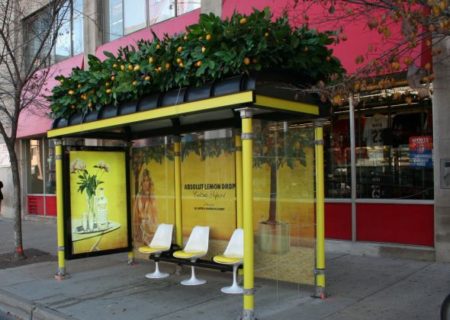
Over time the public in many places has come to expect, but seldom love, a growing variety of new types of billboards. This so-called “out-of-home” advertising is the second fastest-growing sector of the industry, just behind the internet. In its New York debut, 35 years ago, (early “privatization” during a governmental financial burnout), little kids waiting for school buses were gifted with giant ads populated by cartoon characters shilling nicotine and the urban billboard was born. Now it is the intention of this industry to solve our “bike problem” the way they did our “bus shelter problem”, making things the same to save themselves money instead of different to fit our different needs, justifying boring uniformity by calling it Modern Design. Can we tolerate another wave of brain-numbing pleas to conspicuous over-consumption, when we have the choice of providing ourselves with a beautiful and fully-diversified sea of evidence of our desires and need to be creative, self-reliant and generous?


2.4.1 How much would it cost to implement a program


Costs depend upon a number of factors. We will be using re-worked bikes and volunteer help from artists, mechanics and others from the community. There are many who have shown, in communities across North America, a willingness to volunteer their time and knuckles to helping use the bicycle as a tool of reconciliation among different populations and a fun way to learn a useful skill and meet interesting and socially-sensitive people. It is a medium through which community-minded and environmentally aware people can put something back and explore their more generous natures in what many look at as a consumption-obsessed society.

If these vehicles are fun to look at and distinctive, connected to their communities, we are convinced that this will make them respected not robbed, and more recoverable if they do wander. Distinctive markings and welded-on elements can help, but how to do this without making them even more desirable as collectibles is still a question. Finding the right balance between trust and needed security is an important factor in keeping the system as accessible as possible and not letting the criminals dictate the nature of the process. Re-positioning bikes so that they are always in the places where they are going to be needed is one of the most complex and expensive, but essential, aspects of this undertaking. If 25 or more bikes can be moved at one time with minimal labor, costs will be manageable and the public’s convenience assured.

Close monitoring of the condition of vehicles, to maximize safety, is a major concern. Holding riders accountable for damage is always included in bike rental contracts but might not work here. Durable cruisers and 3-speeds will predominate in the fleet, which are perfect for users of our wonderfully flat, manmade city. My shop, in Manhattan was home to three free weekly bike repair and maintenance workshops for the five years. Dozens of volunteer mechanics have lent their time to help their fellow cyclists gain the knowledge they need to keep their gear in shape and help others to do the soon. Even though this is about heavy subjects like survival on the road and elsewhere, creativity and passion help. We need to help nurture the growing realization of the importance of biking, as a positive element in the vitality of our social, environmental and health futures. What new local industries could grow out of this new awareness? 

Like rental cars, after a certain period vehicles can be sold to the public inexpensively and newer models can be introduced. Using a lot of single speed models and only very well-made equipment combined with a diligent and effective maintenance program will keep costs per use very low. Shared use and a non-profit model mean that each person’s individual cost can be very small even though some vehicles are quite high-priced.


2.4.2 What would be the initial capital cost?


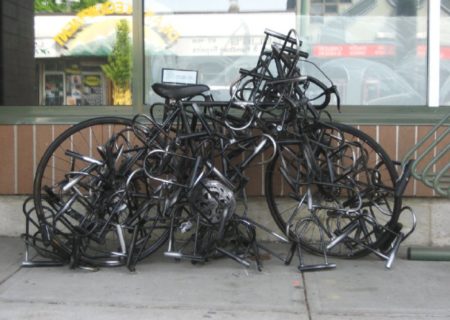
Primary costs include cost of fleet, maintenance, insurance, tracking, billing and collecting fees, educating users, moving vehicles around, administering the system etc. OK we admit it, it only cost us $20,000 to purchase the 250 used and new bikes that form the core of our current fleet. We have some recumbent tricycles that cost thousands of dollars for just one of them. Some bikes are going to be stolen it is guaranteed. Nobody should be naïve about the severity of bike theft as a problem. On the other hand, the biggest mistake here is to design a system around the criminal element and reduce its reach infinitely before you even begin the program.  

Another $50,000 to $100,000 will need to be spent in the short run to get more vehicles and install the vehicle tracking system. Bike replacement costs are an issue and we don’t know how quickly they may disappear. In order to grow quickly, ads will be sold to create a fund to pay for more bikes and other expenses. We are waiting for a quote for our supplemental insurance policy. We already have one for Flushing Meadow and expect that this one will be in the $10,000-$20,000 range.


2.4.3 What are the annual costs?


If each vehicle is used only 4 times a day, or about 1500 times per year, (though much higher usage is expected), we feel that the maintenance costs will be about $150 per vehicle or 10 cents per use. Tires, brake pads and cables wear out from use and so do seats eventually. Everything wears out after some amount of time and some frames will fatigue if used long enough. Since there will be a record of the use of each vehicle, after a number of miles to be determined, perhaps 5,000 or so, each steed needs to be put out to pasture and sold to one of its loyal former riders for a tiny sum. Many bikes are made so well that they might earn themselves a longer tenure in the system and some cyclists claim that their wheels are indestructible but it is better to catch a problem before it happens. Per use charges would need to be adjusted according to actual costs incurred.

More important than costs, which will in any case be disbursed among users, is what will be done with excess funds. It is our intention to use these funds to subsidize the start-up costs of new human-powered vehicle design and fabrication facilities located in New York City. Over 90% of all bikes sold here are currently made in China. The number of specialized functions that can be performed by these vehicles, while at the same time replacing urban-unfriendly cars and trucks, are unlimited. We are home to an extraordinary number of trained architects, artists and sculptors, designers of every kind, craftspeople in every field, who could work together to radically reform our transportation system and this program can be the lynchpin of that effort.


2.4.4 What are the possible funding sources, obstacles and advantages of each?


 Best option: Self-funded after initial modest costs. Our experiences in Flushing Meadow park can be the raw material of a more informed and appropriate program for the whole city. Our test can take place while other similar or radically different models are tried in other parts of the city. After some months we will already know so much more than we do today, that an RFP may be possible. While a single large program has its advantages, dispersing elements of this effort could work too. Once we know what we are doing, it is important to expand the system as quickly as possible. Because this is a matter of equity and because these changes are so badly needed and long overdue, doing everything as soon as possible, without sacrificing the quality of the program, is a good idea.

          Co-factoring with local businesses and institutions, many of whom already use bikes. Their “members” would have access to the entire system. They could increase traffic to their establishments. Imagine that take-out restaurant cyclist delivering two bikes (pulled behind him safely on a specially-built trailer) along with the spicy food. Bringing in a profusion of players will give this program the kind of vitality that can continue to spur innovation and further development.

          Localization. Giving a neighborhood the opportunity to use its educational and vocational facilities to foment its own special, recognizable designs can act as a spur to communities to declare and express themselves this way and involve citizens in cooperative design and building projects. The growing success of community-based programs across the country, some located at schools, others in small towns and cities, demonstrates a broad-based willingness by both young people and in many cases their parents, to use this activity as a teaching tool and spur to civic responsibility.

Grants. Due to the environmental, health, cultural, economic and other benefits to the society which will be encouraged through these developments, there are many grants which can be applied for and for which we would be eligible.

          Charges for Ultra-luxury and other non-conventional models. A $2,000 vehicle must be rented for only fifty 4-hour days at $10/hour to pay for its initial acquisition. Maintenance, repair and moving cost would add a substantial sum, but it is clear that the secret of success is to have a large operation which has so many potential clients that levels of use of this intensity can be maintained. Fortunately, the ubiquity of cell-phones and the low acquisition and maintenance costs of the needed hardware and software allow for warp-speed growth which will easily absorb these costs. One goal is to reward builders and designers, especially local ones, for taking all of these matters into account, in order to enable the continuous improvement in this equipment that our rapid learning curve can propel.

Insurance is a big cost. An exception to the “no ads for giant companies” policy could be made in the case of an insurance company whose cooperation could help expedite the entire process and whose absence makes this all nearly impossible. One of the two sponsors of the Swiss Tour de Sol experimental vehicle events throughout the 1980s was a Swiss insurance company.

If a small handful of very big, rich billboard companies are willing to provide us with a complete system, including the vehicles and stations, how could anything be better? Users of their historically under-protective bus shelters, covering barely 1/6 of all stops ask “How could anything be worse?” Well, the cigarette ads that monopolized the shelters before they were banned are gone, but not the beer and vodka ads that now invariably predominate in low-income neighborhoods. Do we need more ads for cars and candy bars, camouflaged as recognition of bicyclists’ needs? 

Not all ads are bad news though. Some ads, limited to local businesses or theatrical events are appropriate during a limited period of time, to get the project off the ground and guarantee good maintenance. Besides, giving a serious boost to local economic development and small-scale entrepreneurship could be a major benefit of this program, while privatizing our public spaces and giving control to a large scale entity, whose prime, perhaps only, motivation is profit, will distort and destroy almost all of the most beneficial potential of this needed building block in a survivable future.